What you get
32 pages. Ten sections. One pattern.
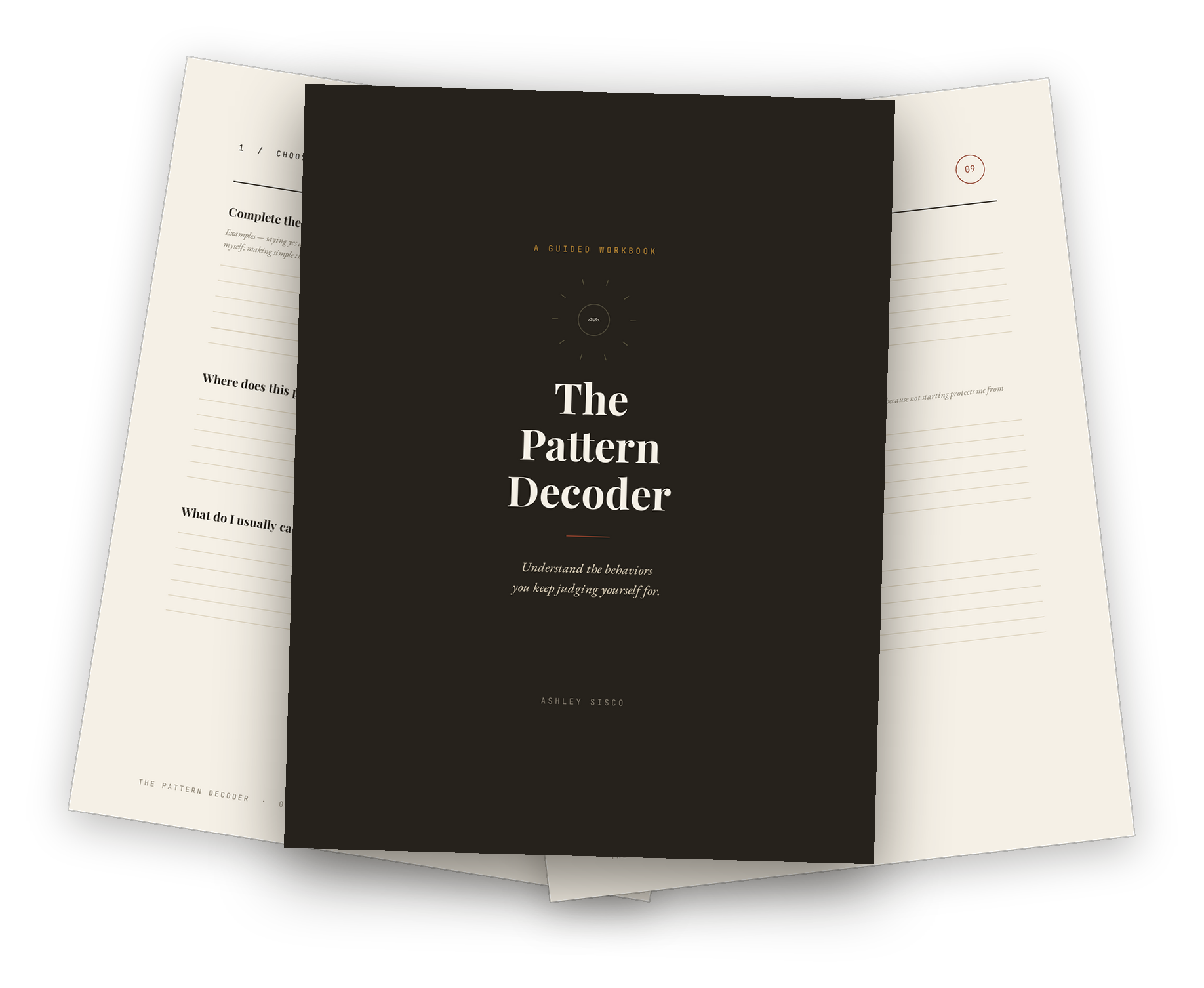
A fillable PDF you can type into and save, plus a print edition if you would rather write by hand. Yours to keep — run it again on a different pattern whenever you want.
A guided workbook
Understand the behaviors you keep judging yourself for.
"I'm lazy."
When something matters enough that I might fail, I delay starting — because not starting protects me from finding out.
Pay what you can · $23 suggested
32 pages · Fillable PDF + print edition
What you get
A fillable PDF you can type into and save, plus a print edition if you would rather write by hand. Yours to keep — run it again on a different pattern whenever you want.
Why this works
Most of us jump straight from behavior to identity. I avoided the email, therefore I am irresponsible. I asked for reassurance, therefore I am needy. The verdict arrives so fast that the sequence underneath it never gets examined.
This workbook takes one recurring behavior and walks it through ten sections — what triggers it, what it actually does for you, what it protects, when it made sense, what it costs now, and where the one small place is that you could choose differently.
Understanding is not the same as excusing. You don't have to keep the pattern. You don't have to call it healthy. You also don't have to shame yourself into becoming someone else.
Specificity turns a character flaw back into a behavior — and behaviors have context.
What's inside
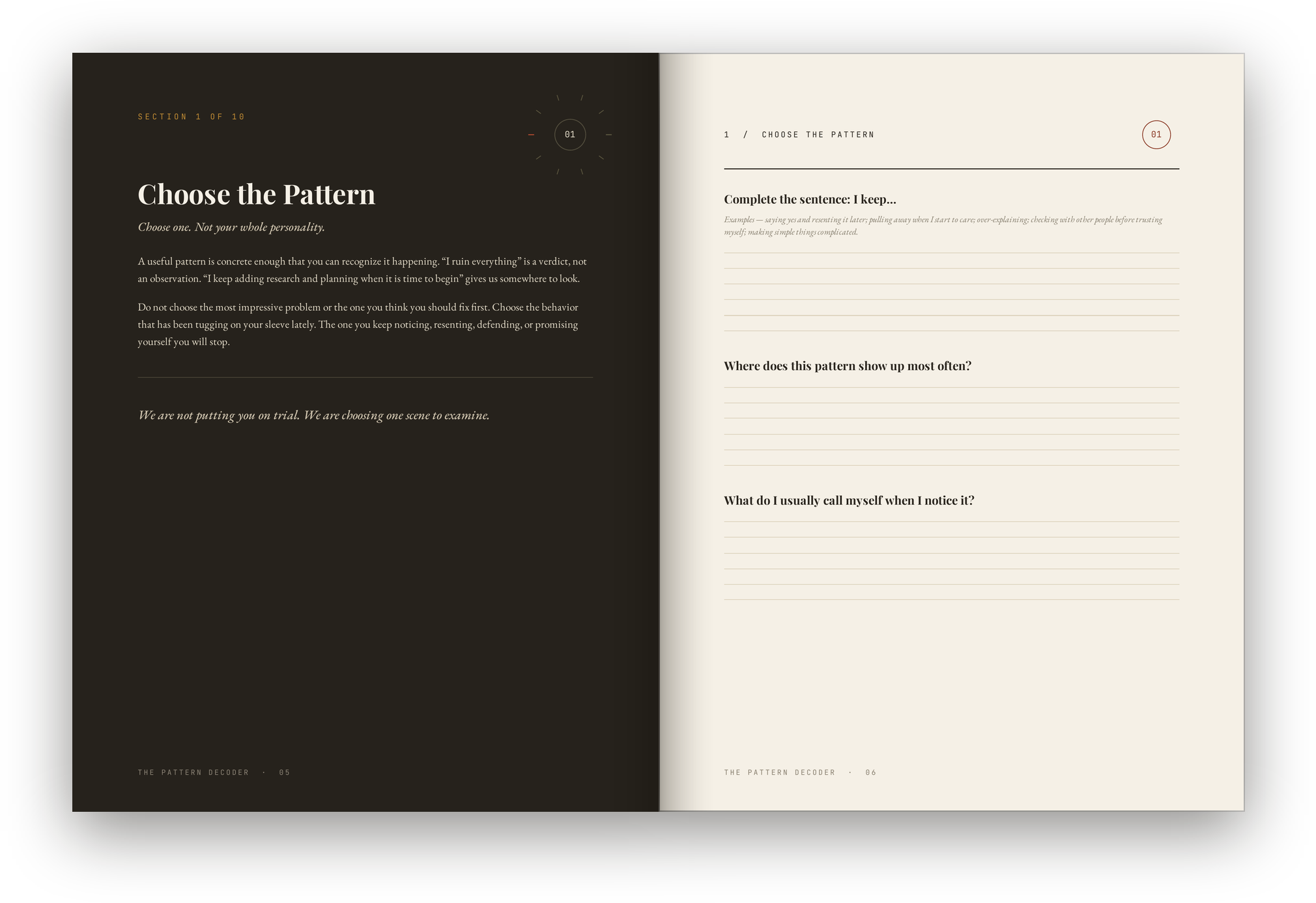
Each section opens with a short piece of writing, then gives you three or four questions with room to answer. You can finish in one sitting — but you don't have to.
Choose one. Not your whole personality.
Observation before explanation.
Every repeated behavior does something.
Protection is not always fear. Sometimes it is preservation.
You do not need a perfect origin story.
A strategy can outlive the conditions that created it.
Change works better when it has somewhere to go.
Not a reinvention. A small interruption.
Accuracy is kinder than a flattering lie — and more useful than an insult.
Insight matters most when it changes your relationship with the moment.
A page from inside
The question is not, "Why am I like this?" It is, "What changes for me when I do this?"
What looked like laziness may have been protection from exposure. What looked like indecision may have been fear of closing a door. What looked like neediness may have been a longing for connection.
Understanding gives you something judgment rarely does: another choice.
Pay what you can · $23 suggested
Instant download · 30-day refund